Navigating the Complexities of API Governance
Effective API governance balances standardization with flexibility, providing clear guidelines for development while allowing innovation through multi-tiered approaches tailored to organizational needs.
10 posts
Effective API governance balances standardization with flexibility, providing clear guidelines for development while allowing innovation through multi-tiered approaches tailored to organizational needs.

API security protects the integrity, confidentiality, and availability of APIs through authentication, authorization, encryption, rate limiting, and regular security testing to prevent unauthorized access and data breaches.

OpenAPI specifications enhance API security by defining authentication requirements, access controls, data validation rules, and encryption standards in a standardized, machine-readable format.

HTTPS encrypts data in transit, proves a site is genuine and builds trust. Learn why it matters and how to adopt it: certificates, server configuration, redirects and keeping your setup current.

The OWASP API Security Top 10 identifies critical security risks including broken authentication, excessive data exposure, inadequate resources, and security misconfigurations that can lead to data breaches and system compromises.

WAF stands for 'Web Application Firewall.' It is a security solution designed to protect web applications from various online threats, vulnerabilities, and attacks. A WAF acts as a barrier between a web application and the external world, filtering and monitoring incoming and outgoing traffic to detect and prevent malicious activities.
Data masking is essential for REST APIs to protect sensitive information, comply with regulations, maintain data integrity, enhance security, and facilitate testing environments, ultimately preserving user privacy and reducing breach risks.
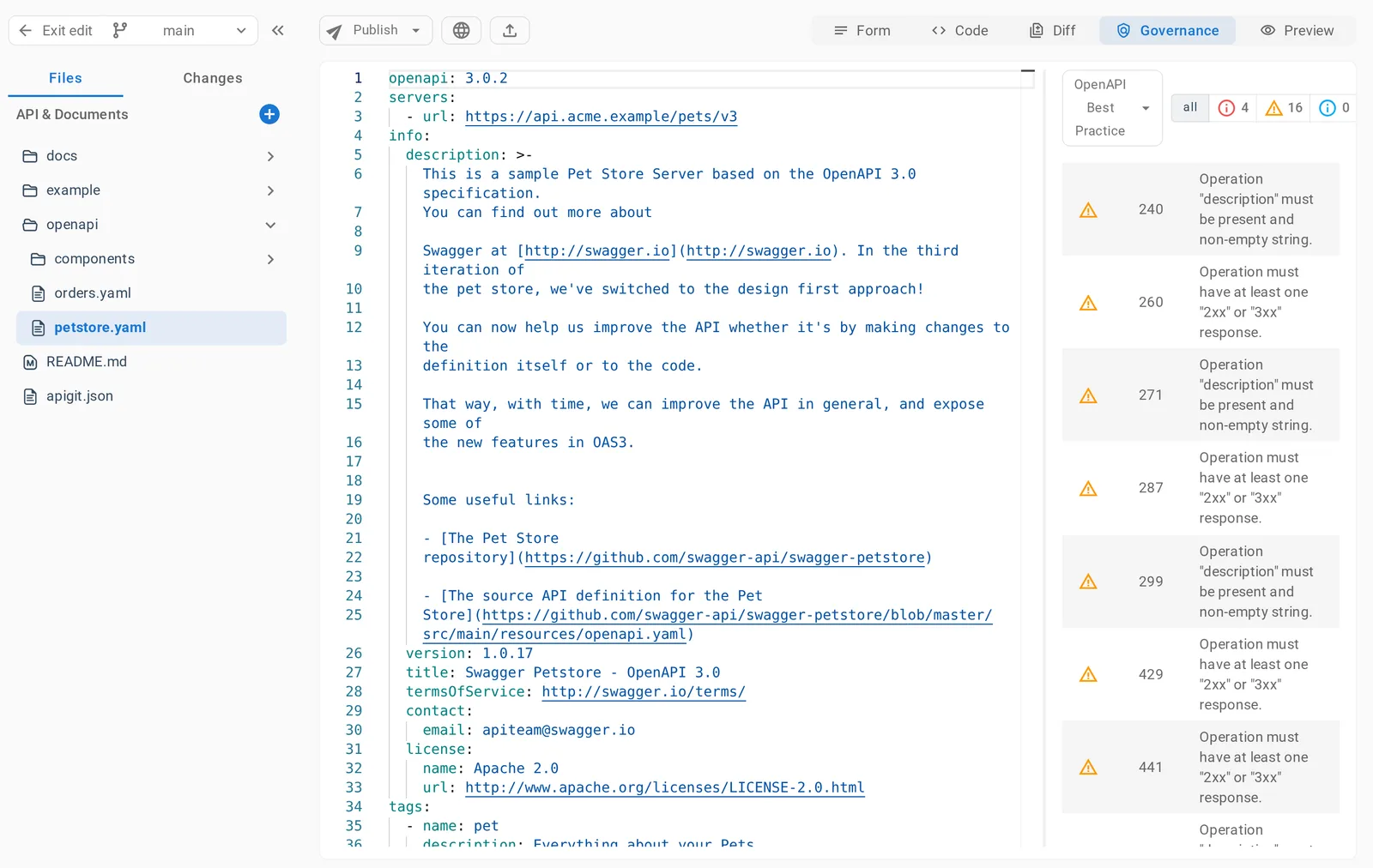
APIGit's governance features help organizations define API standards and check specifications against them while editing and during pull request review.
API governance provides structure and oversight for API development, ensuring quality, security, compliance, and alignment with business goals. It helps organizations maintain consistency, reduce redundancy, maximize ROI, and improve the user experience through standardized documentation and design patterns.

Vulnerability scanning for REST APIs is crucial to identify security weaknesses, prevent data breaches, ensure compliance, maintain user trust, and protect your business reputation by addressing risks before they can be exploited.
Create a free workspace, add an OpenAPI file and a Markdown guide, and publish your first documentation site and mock server in minutes.
Free for individuals. No credit card.
$ npm install -g @apigit/cli$ apigit auth login$ apigit doc publish