At Apigit, we strive to democratize APIs and empower users to utilize and construct APIs with the Apigit API Platform to enable a thriving API-first world. With over tens of thousands of users, we continue to expand our reach and provide access to the best opportunities Apigit has to offer – from newcomers to advanced users.
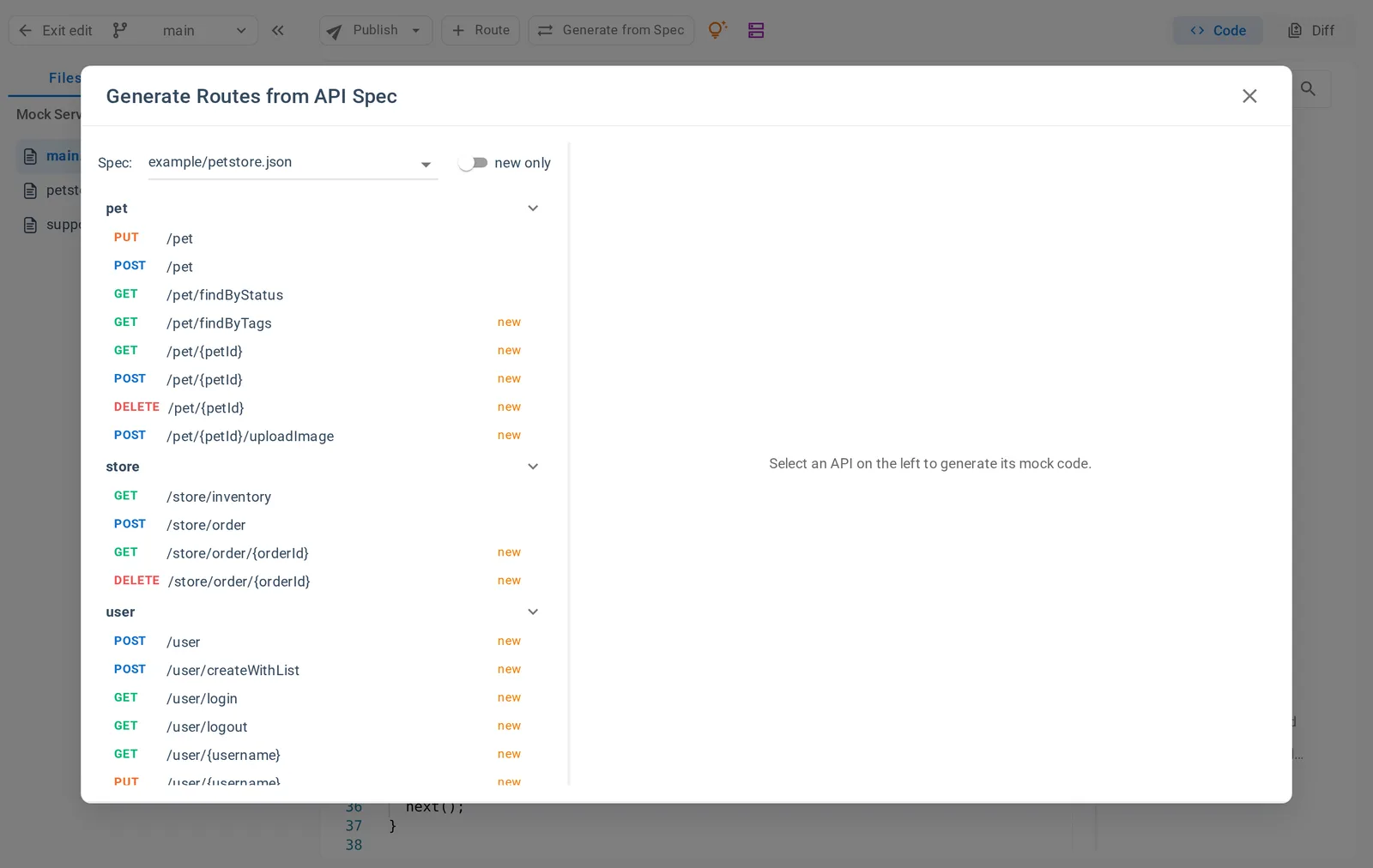
Mock servers accelerate API development by enabling parallel work between frontend and backend teams, facilitating testing, and providing realistic responses for development and demonstration purposes.
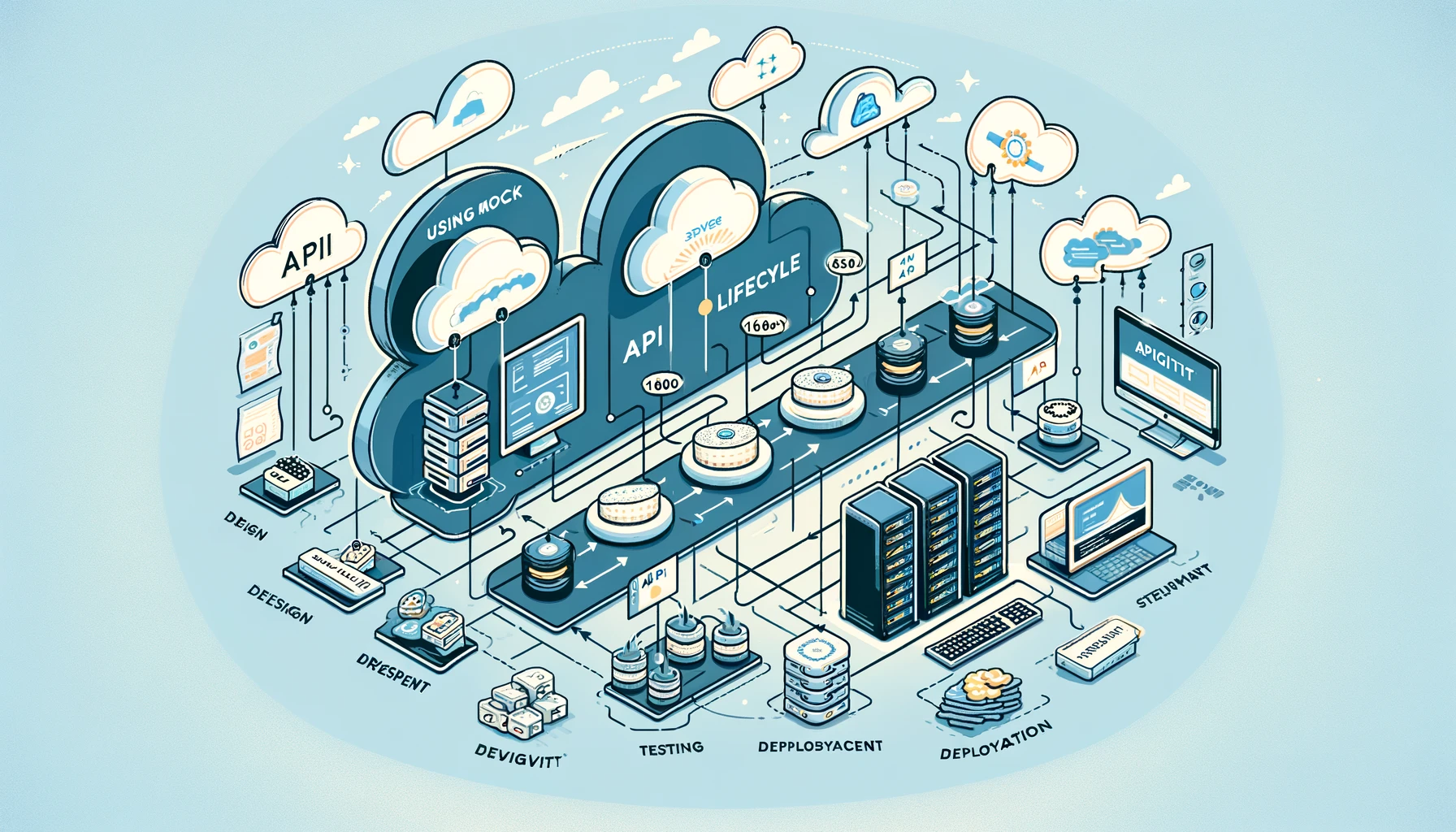
APIs have become a vital part of modern software and business infrastructure, enabling organizations to expand the capabilities of software and improve integration with external services. The process of API development involves several stages, including planning, designing, developing, testing, deploying, and maintaining APIs. The API producer is responsible for creating and managing the API, while the API consumer utilizes the API to build applications or integrate with existing software. Apigit's API Platform is designed to help organizations navigate the API development and management process more effectively, with native Git support and streamlined collaboration. By leveraging Apigit's capabilities, businesses can improve operational efficiency, integration with external services, and stay competitive in the rapidly evolving digital landscape.
This article explains the different components of a REST API by following a request from end to end. An API client is responsible for assembling and directing an API request to the API server. An API request to a REST API consists of an endpoint, method, parameters, request headers, and a request body. The API server handles authentication, validates input data, retrieves or manipulates data from a database, and returns the appropriate response to the client. An API response typically includes a status code, response headers, and a body. API status codes are used to provide information to the client about the outcome of the request and to help the client understand how to proceed. Response headers and bodies provide additional information and data about the response.
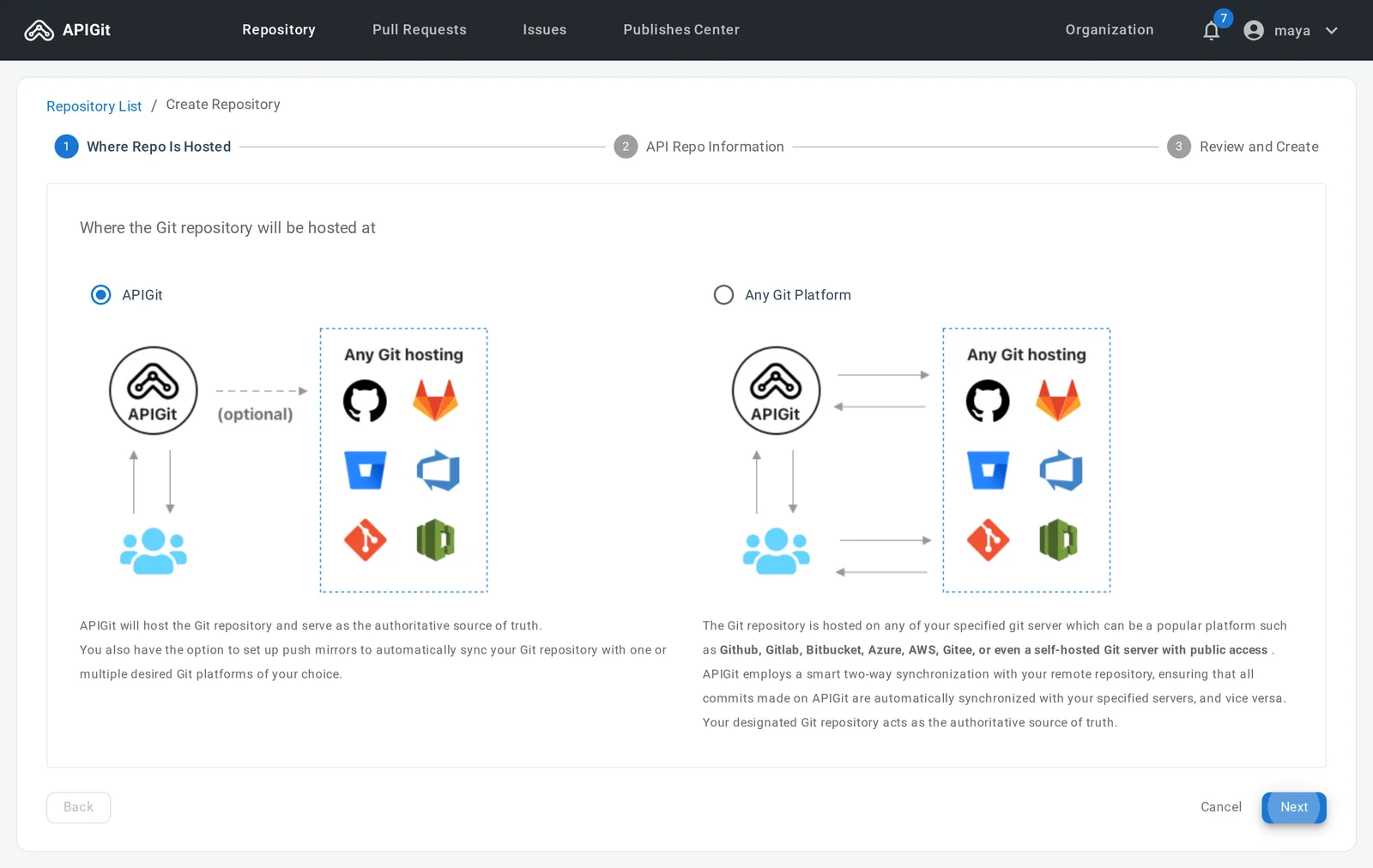
APIGit's Git repository hosting and integration features provide seamless collaboration, version control, and synchronization with popular platforms like GitHub, GitLab, and Bitbucket.
Automatic mock server generation accelerates API development by instantly creating functional API simulations from OpenAPI specifications, complete with realistic example responses.
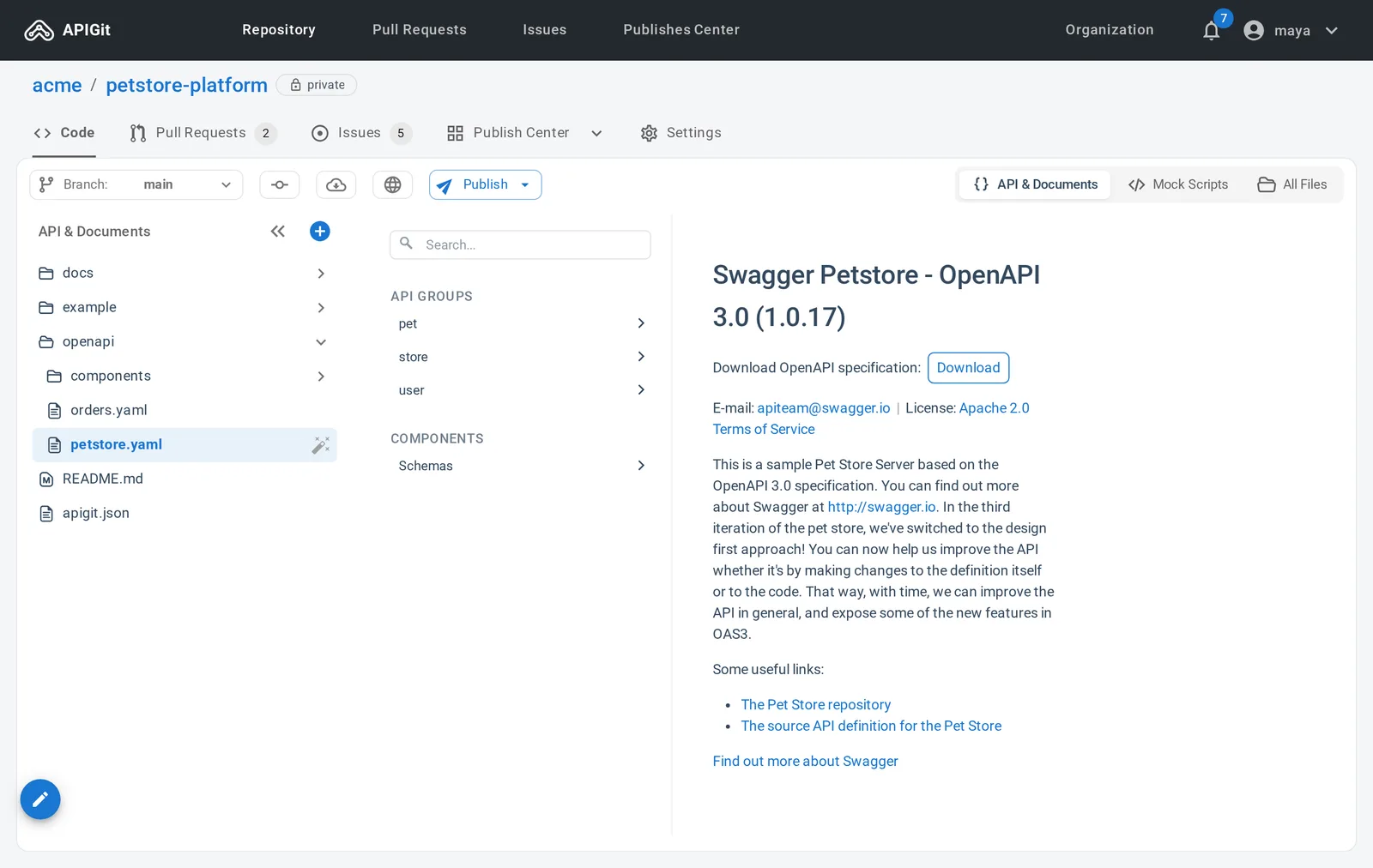
Native Git integration for API management provides powerful version control, branching strategies, and collaboration features that enhance development workflows and ensure consistency across API projects.
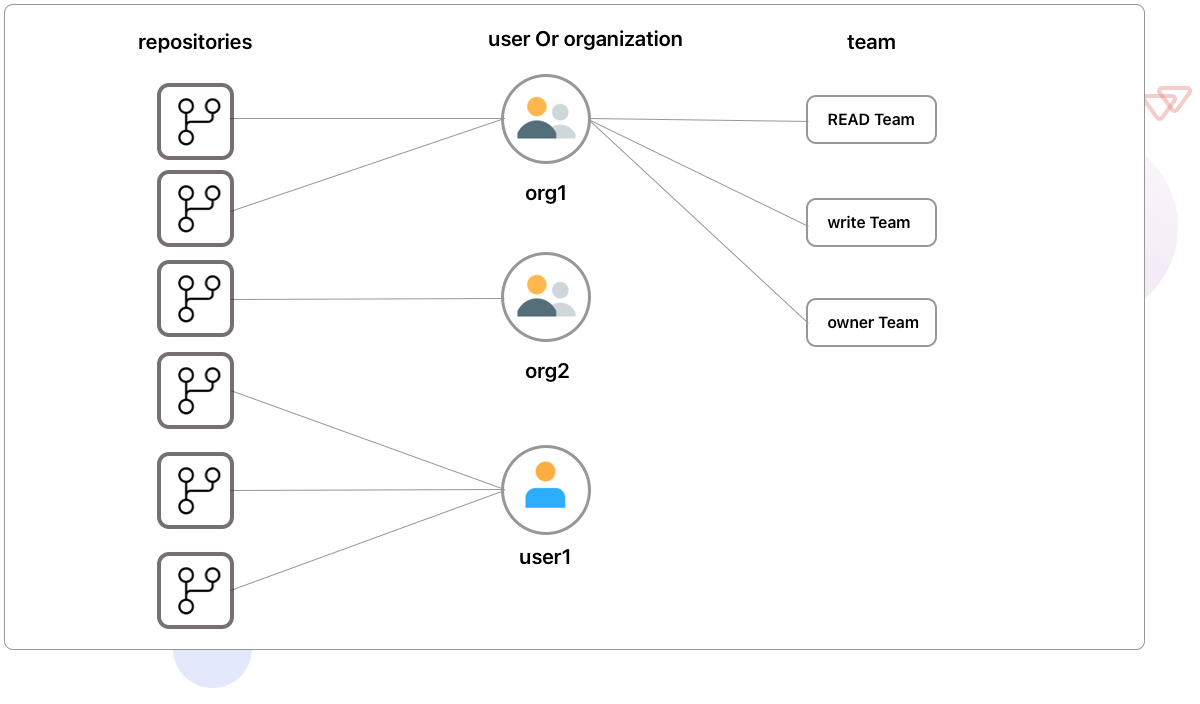
APIGit supports flexible team collaborations and Role based access control
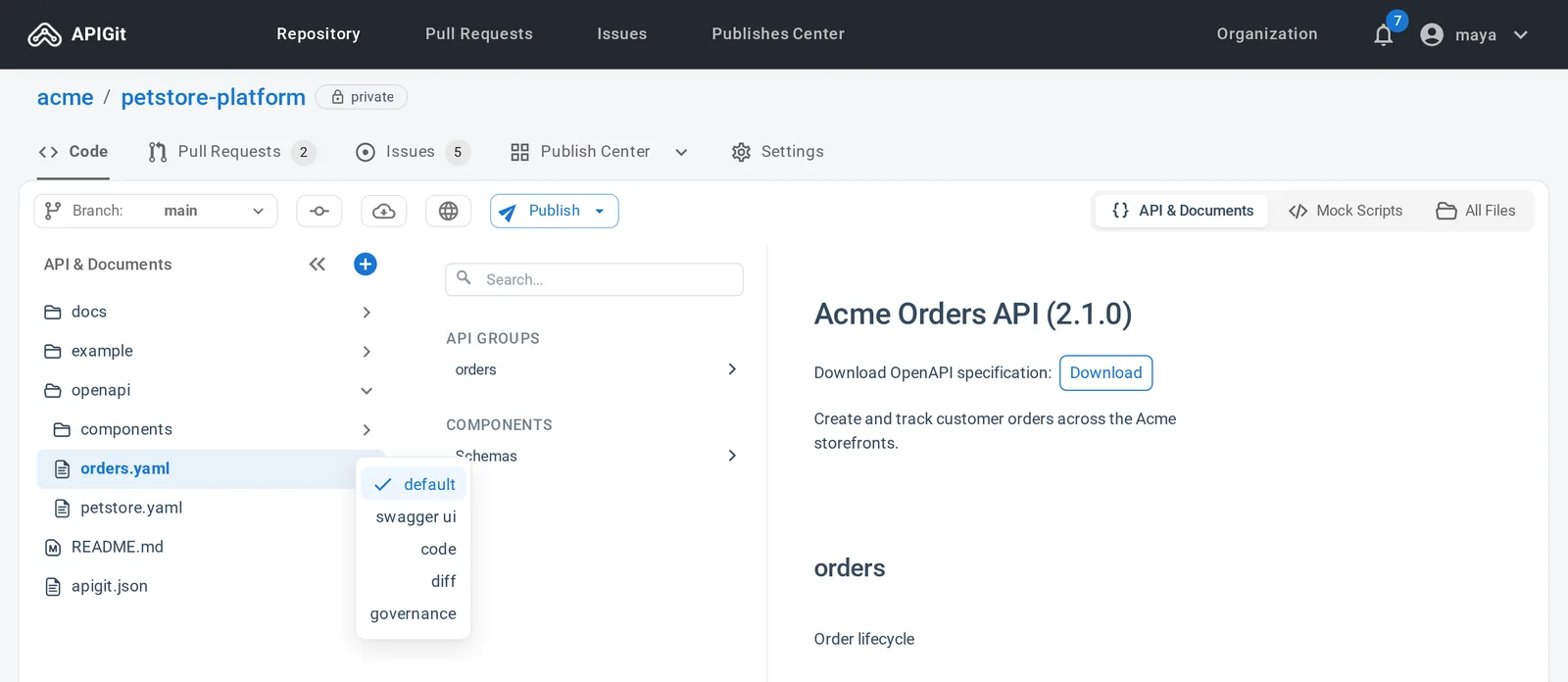
Read OpenAPI, AsyncAPI and GraphQL with Redoc 3, inspect source and review diffs. Updated for the current editor tabs and removal of Swagger UI.